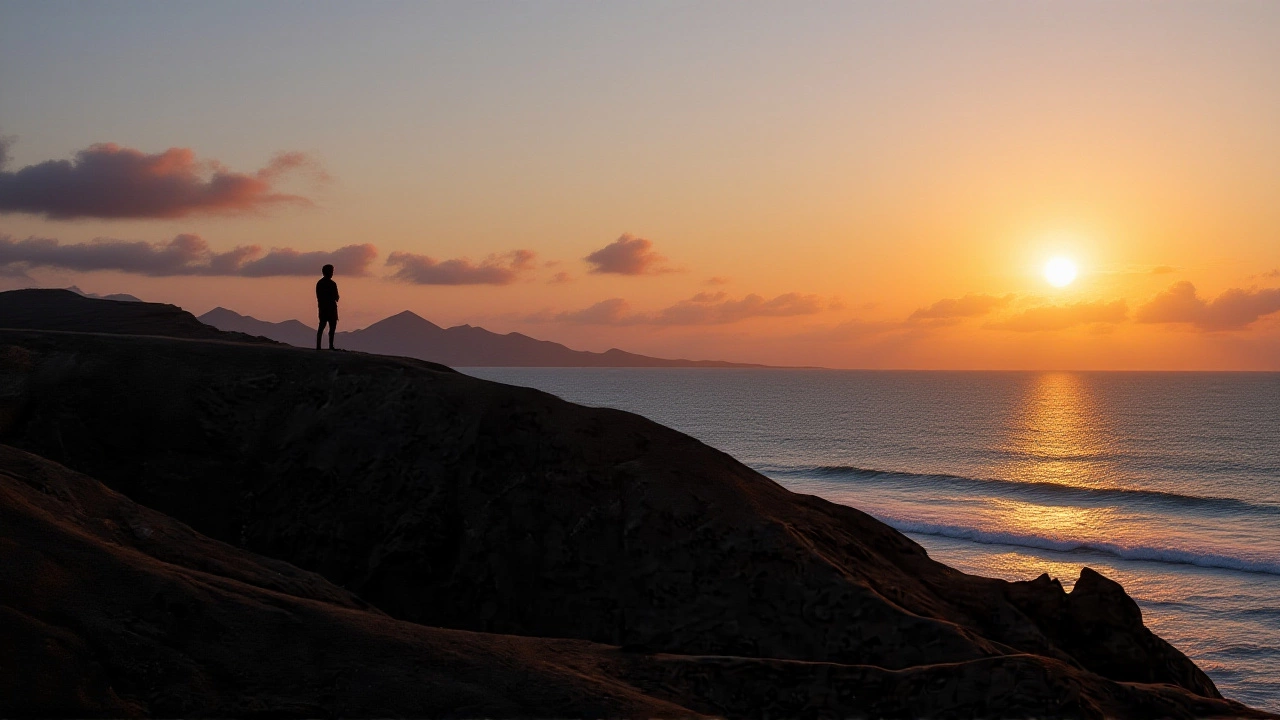
More than Canary Islands Tourism Board ever recorded, 14 million international tourists flooded the Canary Islands in 2025. That’s not just a record—it’s a breaking point. The archipelago, famed for its volcanic landscapes and year-round warmth, now hosts more visitors than its 2.2 million residents. And while hotel bookings and cruise arrivals hit new highs, locals are taking to the streets—not for sunbathing, but for survival.
The Numbers Don’t Lie—But They Don’t Tell the Whole Story
In the first quarter of 2025 alone, the islands welcomed 4.36 million tourists, a 2.1% jump from 2024. But the real shock came in spending: €6.86 billion poured in, a 5.46% surge that outpaced visitor growth by more than double. By August, monthly arrivals hit 1.23 million—a 6% year-over-year spike. And by year’s end, Startup News.fyi confirmed the total exceeded 14 million. For context: that’s six times the population of Tenerife. Tenerife and Gran Canaria absorbed nearly 70% of that traffic.But here’s the twist: tourism revenue isn’t trickling down. Wages in hospitality remain stuck at €1,100 a month for many. Meanwhile, rents in Santa Cruz and Las Palmas have jumped 47% since 2020. Locals aren’t just angry—they’re being priced out of their own homes.
When the Beaches Become Battlefields
On April 22, 2024, 50,000 people filled the streets of Santa Cruz de Tenerife. Not for a festival. Not for a concert. For a protest. Organized by Canarias Tiene Un Límite—a coalition of residents, teachers, fishermen, and nurses—the march carried signs reading “Tourism Is Killing Us” and “Water Is Not a Commodity.”Their grievances are precise: 80,000 hospitality workers went on strike in early 2025 over stagnant pay and brutal hours. Water shortages, once rare, now plague seven islands. On Lanzarote, some neighborhoods get water only three days a week. On El Hierro, wells have dried up entirely. And it’s not just environmental. The island’s unique flora—some species found nowhere else on Earth—are being trampled underfoot by mass tourism infrastructure.
“Today, our dependence on tourism is greater than ever,” Canarias Tiene Un Límite declared in a statement ahead of their next action. “Housing is more inaccessible than ever. We’re losing our natural heritage at an alarming rate.”
Regulations That Feel Like Band-Aids
The response? Half-measures.In October 2025, Tenerife rolled out an eco-tax of €1.50 per night for tourists staying in hotels and rentals. Mogán, a resort town on Gran Canaria, slapped on a €0.15 daily fee—so small it’s barely noticed. Meanwhile, El Hierro quietly capped new hotel licenses and slashed direct flights, hoping to stay off the radar.
But the most radical move came in November: new legislation gave residents in any neighborhood the power to vote on whether to ban short-term rentals altogether. In La Laguna, a historic town on Tenerife, 68% of voters backed a moratorium. In Playa del Inglés, where 80% of apartments are now Airbnbs, the vote failed by a hair.
“These fees are symbolic,” said María González, a 58-year-old schoolteacher and protest organizer. “They don’t touch the core problem: foreign investors buying up entire buildings and turning them into holiday units. The tax money? Goes to a fund no one can track.”
The Breaking Point Is Here
The Canary Islands Tourism Board insists growth is sustainable. But residents see something else: a system designed to extract, not endure. Graffiti on abandoned villas reads: “Tourists Come, We Go.”Environmental groups warn that coral reefs near Fuerteventura are dying from anchor damage and sewage runoff. On La Palma, hikers now navigate trails littered with plastic bottles and broken sunscreen containers. And in 2024, a fire on La Gomera—fueled by dry brush and tourist campfires—destroyed 2,000 hectares of protected forest.
Even the island’s famed climate is changing. Summer temperatures have risen 1.8°C since 2010. Rainfall has dropped 22% in the same period. The same sun that draws tourists is now baking the land that feeds its people.
What Happens Next?
The next flashpoint arrives on May 18, 2025. Canarias Tiene Un Límite is planning its largest demonstration yet—simultaneous marches across all seven islands. Their demand? A complete overhaul: a cap on tourist numbers, a ban on new short-term rentals in residential zones, and a 30% wage floor for hospitality workers.Spain’s central government has remained silent. The EU has offered funding for “sustainable tourism,” but no binding limits. Meanwhile, airlines are adding more routes. Booking.com is promoting “hidden gems” on islands like El Hierro and La Gomera—precisely where locals say they’re already at capacity.
“They think we’re just angry because our streets are crowded,” said Carlos Mendez, a fisherman from Puerto de la Cruz. “We’re angry because our children won’t have a home here. Or clean water. Or a future.”
Frequently Asked Questions
Why are locals protesting if tourism brings in so much money?
While tourism generated €14 billion in 2025, most revenue flows to foreign-owned hotels, airlines, and online booking platforms. Locals report that wages haven’t kept pace with inflation, housing costs have doubled in five years, and public services are overwhelmed. Only 18% of tourism income is reinvested in local infrastructure, according to a 2025 study by the University of La Laguna.
What’s the impact on water supply in the Canary Islands?
Each tourist uses an average of 350 liters of water per day—nearly triple the local average. On Lanzarote and Fuerteventura, desalination plants now supply 80% of drinking water, but they’re running at 120% capacity. In 2024, water rationing affected over 120,000 residents. Environmental groups say aquifers are being depleted faster than they can recharge.
How effective are the new tourist fees?
Tenerife’s €1.50 eco-tax and Mogán’s €0.15 fee raise only €42 million annually—less than 0.3% of total tourism revenue. Critics argue the fees are too low to deter visitors and lack transparency on how funds are used. So far, no island has published a detailed breakdown of where the money goes, fueling distrust among residents.
Are there any successful examples of sustainable tourism on the islands?
Yes—El Hierro is the only island in Spain to run entirely on renewable energy, and it limits tourist access to 1,200 per day. Its small airport only allows 12 flights weekly. Visitor numbers are 80% lower than Gran Canaria’s, but local income per capita is higher. It proves sustainability and economic viability can coexist—if political will exists.
What’s the role of Airbnb and other short-term rentals?
Short-term rentals now occupy 28% of all housing stock on Tenerife and 34% on Gran Canaria, according to regional housing data. Many properties were converted from long-term rentals to tourist units after 2020. In some neighborhoods, over 60% of buildings are now empty for nine months a year—owned by investors who never set foot on the island.
What’s next for the Canary Islands’ tourism model?
The May 18, 2025 protests could force Spain’s government to act. If turnout exceeds 100,000—as organizers predict—it may trigger a national debate on tourism limits. Some experts suggest capping annual arrivals at 10 million, reviving public housing programs, and taxing foreign property buyers. Without bold action, the islands risk becoming a ghost town for locals and a theme park for outsiders.

Caleb Nathanson
Hi, I'm Caleb Nathanson, a passionate blogger with expertise in creating engaging content for forums. With years of experience in the blogging world, I have developed a knack for identifying trending topics and crafting compelling discussions. My goal is to inspire conversations and bring people together through my love for writing. I'm always eager to learn and grow as a writer, and I'm excited to share my knowledge with others.